If you’ve ever ordered a purple bubble tea, colorful ice cream, or an Asian-inspired dessert, you may have wondered: Is that ube or taro?
Ube and taro are often confused because both are root vegetables commonly used in Asian cuisine, and both can appear in purple desserts and drinks. However, they are not the same plant—and once you know what to look for, the differences become much easier to recognize.
From their appearance and flavor to their texture and culinary uses, ube and taro have distinct characteristics that make each ingredient unique.
So, what exactly is the difference between ube and taro?
Let’s take a closer look.
What Is Ube?
Ube is a purple yam scientifically known as Dioscorea alata. It is especially associated with Filipino cuisine, where it has traditionally been used in desserts.
The inside of ube can have a striking violet or purple color, which is one of the reasons it has become such a recognizable ingredient.
Traditionally, fresh ube is cooked and incorporated into desserts such as ube halaya, a Filipino purple yam jam. Today, ube can also be found in cakes, cookies, pancakes, bread, ice cream, lattes, smoothies, and many other recipes.
Because fresh ube isn't always easy to find outside regions where it is commonly grown, ube powder provides a convenient way to incorporate purple yam into recipes.
Ube is particularly popular in sweet recipes because of its naturally mild, slightly sweet flavor.
What Is Taro?
Taro is another root vegetable, scientifically known as Colocasia esculenta.
It has been cultivated for thousands of years and is an important ingredient in cuisines throughout Asia, Africa, the Pacific Islands, and other tropical regions.
Unlike ube, which is strongly associated with its purple flesh, taro usually has white, cream, or pale flesh with small purple or pinkish speckles.
Taro is also extremely versatile.
It can be boiled, steamed, mashed, fried, baked, or incorporated into both sweet and savory dishes. You've probably encountered taro in bubble tea, taro buns, taro cakes, chips, soups, or traditional dishes such as Hawaiian poi.
Although taro-flavored products are sometimes bright purple, the natural root itself usually isn't nearly as intensely purple as ube.
Ube vs. Taro: Quick Comparison
Here are some of the main differences between the two.
| Ube | Taro | |
|---|---|---|
| Scientific name | Dioscorea alata | Colocasia esculenta |
| Plant type | Yam | Corm/root vegetable |
| Flesh | Often vibrant purple | Usually white or cream with purple specks |
| Flavor | Mildly sweet, earthy and somewhat nutty | Mild, earthy and somewhat nutty |
| Texture | Starchy and soft when cooked | Starchy and creamy when cooked |
| Common uses | Primarily desserts and sweet drinks | Sweet and savory dishes |
| Strong association | Filipino cuisine | Many Asian and Pacific cuisines |
Despite some similarities, ube and taro aren't interchangeable in every recipe.
Their different flavors, colors, textures, and moisture levels can affect the final result.
Is Ube the Same as Taro?
No. Ube and taro are two different plants.
This is probably the biggest misconception surrounding the two ingredients.
Ube is a species of yam belonging to the genus Dioscorea, while taro belongs to an entirely different plant family.
The confusion largely comes from the way the ingredients are marketed.
Taro drinks and desserts are frequently colored purple, particularly in cafés and bubble tea shops. Someone encountering taro for the first time may therefore assume that taro itself is a bright-purple root vegetable.
Meanwhile, naturally purple ube has become increasingly popular around the world.
Put a purple taro milk tea next to an ube latte and they can look surprisingly similar.
But the ingredients themselves are different.
What Does Ube Taste Like?
Ube has a mild, slightly sweet and earthy flavor.
Depending on the preparation, people may also notice subtle nutty or vanilla-like qualities. This gentle flavor profile is one reason ube works so well in desserts.
Rather than overpowering other ingredients, ube can complement ingredients such as:
-
Coconut
-
Vanilla
-
Condensed milk
-
Chocolate
-
Cream cheese
-
Matcha
-
Cinnamon
-
Milk and cream
Its combination of flavor and beautiful natural color has made ube particularly popular in modern baking and drinks.
What Does Taro Taste Like?
Taro also has an earthy, mildly nutty flavor, but it generally has a different character from ube.
Cooked taro can be somewhat reminiscent of a starchy potato, although its flavor is distinctive.
Because taro itself isn't particularly sweet, the sweetness of taro desserts and drinks often comes primarily from added sugar and other ingredients.
Taro's relatively neutral flavor makes it useful in savory dishes as well.
It can be added to soups, curries and stews or simply steamed and eaten as a starchy side dish.
This versatility is one of the biggest culinary differences between taro and ube.
Ube vs. Taro Color
Color is usually the easiest way to distinguish the two ingredients in their natural forms.
Ube flesh can be distinctly purple or violet.
Taro, on the other hand, typically has a pale interior with tiny purple, pink, or grayish markings.
However, don't rely exclusively on the appearance of prepared foods.
A bright-purple drink labeled "taro" doesn't necessarily get all of that color naturally from taro. Depending on the product, flavorings and coloring may have been added.
Similarly, the color of ube recipes can vary depending on the amount and type of ube used.
Ube vs. Taro Texture
Both ingredients are starchy, but their textures aren't identical.
Once cooked, ube becomes soft and starchy, making it particularly suitable for purées, jams, baked goods and desserts.
Taro develops a creamy, dense texture when cooked. This makes it suitable for everything from mashed preparations to fillings, soups and fried snacks.
Texture becomes especially important when you're deciding whether one ingredient can substitute for the other.
Replacing taro with ube—or vice versa—may change both the consistency and flavor of a recipe.
How Is Ube Used?
In Filipino cuisine, one of the best-known preparations is ube halaya.
The cooked purple yam is traditionally combined with ingredients such as milk and sugar to create a rich purple yam jam.
Ube halaya can then be eaten on its own or used in other desserts.
Modern ube recipes go much further.
You can use ube to make:
-
Ube cake
-
Ube cookies
-
Ube cheesecake
-
Ube ice cream
-
Ube brownies
-
Ube pancakes
-
Ube waffles
-
Ube bread
-
Ube pandesal
-
Ube mochi
-
Ube lattes
-
Ube smoothies
-
Ube chia pudding
Using ube powder can make experimenting with these recipes particularly convenient because you don't have to find, peel and prepare fresh purple yam every time you want to make something with ube.
How Is Taro Used?
Taro has an exceptionally broad range of culinary uses.
In sweet recipes, you'll find taro in:
-
Bubble tea
-
Ice cream
-
Sweet buns
-
Cakes
-
Pastries
-
Mochi
-
Puddings
But unlike ube, taro is also commonly used in savory dishes.
Depending on the cuisine, taro may be boiled, fried, steamed or cooked in soups, stews and curries.
In Hawaii, for example, cooked taro is traditionally used to make poi.
Taro can also be sliced and fried into chips.
This ability to work naturally in both sweet and savory preparations makes taro different from the way ube is most commonly used.
Can You Substitute Ube for Taro?
Sometimes—but don't expect exactly the same result.
Both are starchy ingredients, so substitution may work in certain recipes where texture isn't extremely sensitive.
However, ube has its own flavor, color and moisture characteristics.
Replacing taro with ube can make a dish more distinctly purple and change its flavor profile. Replacing ube with taro, meanwhile, can produce a much paler result and won't necessarily recreate the flavor associated with ube desserts.
For recipes specifically designed around ube, it's generally better to use actual ube or ube powder rather than taro.
Is Purple Bubble Tea Ube or Taro?
It can be either.
One of the reasons people confuse these ingredients is the popularity of purple bubble tea.
Taro milk tea has been a popular bubble tea flavor for years. It often has a light-purple or lavender appearance.
But ube drinks have also become increasingly common, including ube milk tea, ube boba and ube lattes.
The easiest solution is simply to check the menu or ingredient list.
A purple drink isn't automatically ube, and it isn't automatically taro.
Is Ube a Sweet Potato?
No.
This is another common source of confusion.
Ube is a yam, not a sweet potato.
Purple sweet potatoes also exist, which makes things even more confusing because their interiors can have an intense purple color similar to ube.
Ube, taro and purple sweet potatoes are therefore three distinct ingredients.
While they can sometimes serve similar culinary purposes, they shouldn't automatically be treated as interchangeable.
Why Has Ube Become So Popular?
Ube has long been part of Filipino cuisine, but international interest in the ingredient has grown significantly.
Its appearance certainly helps.
Bright-purple pancakes, cookies, cakes and lattes are immediately eye-catching and highly photogenic.
But ube isn't simply about color.
Its mild flavor makes it easy to incorporate into familiar foods while giving them a distinctive character.
A baker can transform a familiar cheesecake, for example, into an ube cheesecake. A morning latte can become an ube latte, while pancakes, waffles and cookies can all be given an ube twist.
This combination of tradition, versatility, flavor and distinctive appearance has helped introduce ube to people around the world.
Ube Powder: An Easy Way to Cook With Ube
If you've decided that ube is what you're looking for, finding fresh purple yam can sometimes be challenging depending on where you live.
That's where ube powder becomes particularly useful.
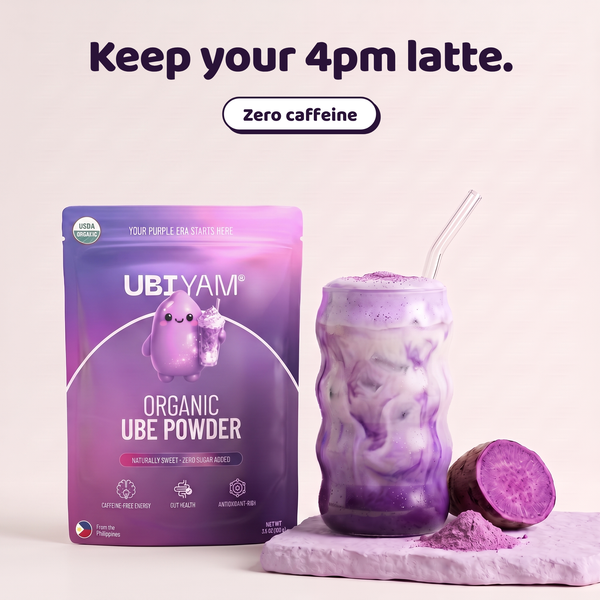
UBIYAM Organic Ube Powder provides a convenient way to incorporate purple yam into drinks, desserts and baked goods without having to source and prepare fresh ube.
It can be used to experiment with recipes such as ube lattes, pancakes, cakes, cookies, smoothies and more.
For anyone discovering ube for the first time, it also makes it easier to start experimenting with different recipes from home.
Ube vs. Taro: Frequently Asked Questions
Are ube and taro the same thing?
No. Ube and taro come from different plants. Ube is a purple yam (Dioscorea alata), while taro is Colocasia esculenta.
Which is more purple, ube or taro?
Ube generally has much more distinctly purple flesh. Natural taro is usually white or cream-colored with purple or pinkish speckles.
Does ube taste like taro?
They have some similarities because both can have mild, earthy and nutty characteristics, but they don't taste identical. Ube is particularly associated with a mildly sweet flavor that works well in desserts.
Can I use ube instead of taro?
It depends on the recipe. Substitution is possible in some dishes, but the color, flavor, texture and moisture may change.
Is ube taro or yam?
Ube is a yam. It is not taro.
Why does taro look purple?
Natural taro may contain small purple markings, but many commercially prepared taro foods and drinks have a stronger purple appearance than the raw ingredient itself.
Which one is better for desserts?
Both can be used for desserts. Ube is especially popular in Filipino sweets and modern recipes such as cakes, cookies, ice cream and lattes, while taro is widely used in Asian desserts and bubble tea.
Final Thoughts: Ube vs. Taro
Ube and taro may sometimes look similar on a menu, but they're two different ingredients with their own culinary identities.
Ube is a purple yam known for its beautiful violet color, mildly sweet and earthy flavor, and important role in Filipino desserts.
Taro is a different root vegetable with typically pale flesh, a starchy texture and an extremely versatile flavor that works in both sweet and savory recipes.
So the next time you see a purple latte, cake or scoop of ice cream, don't automatically assume it's taro.
It might just be ube.
And if you'd like to start experimenting with purple yam at home, UBIYAM Organic Ube Powder makes it easy to bring the distinctive flavor and color of ube into your own drinks, desserts and baked creations.
Related Ube topics :
 Organic Ube Powder