If you’ve spent any time scrolling through food videos or exploring Filipino cuisine, you’ve probably encountered a striking purple ingredient called ube.
From ube lattes and smoothies to cakes, cookies, ice cream, and traditional Filipino desserts, this vibrant purple yam has become increasingly popular around the world.
But behind its Instagram-worthy color is an important question:
Is ube actually healthy?
The short answer is: ube can absolutely be part of a healthy, balanced diet.
Ube is a naturally occurring purple yam that provides carbohydrates, fiber, vitamins, minerals, and colorful plant compounds. However, the nutritional value of an “ube food” depends heavily on how it is prepared. Fresh ube or pure ube powder is very different nutritionally from an ube dessert loaded with sugar, cream, butter, or sweetened condensed milk.
Here’s everything you need to know about ube nutrition, its potential health benefits, and how to incorporate it into your diet.
What Is Ube?
Ube, scientifically known as Dioscorea alata, is a species of yam commonly associated with Filipino cuisine.
It is often called purple yam because of its naturally purple flesh, although the intensity of the color can vary.
Ube has traditionally been used in Filipino dishes and desserts, with ube halaya, a sweet purple yam jam, being one of the best-known preparations.
Its popularity has since expanded internationally.
Today, you can find ube in:
-
Lattes
-
Smoothies
-
Pancakes
-
Cakes
-
Cookies
-
Ice cream
-
Mochi
-
Milk tea
-
Oatmeal
-
Yogurt bowls
-
Protein shakes
One reason ube has become so popular is its distinctive flavor.
Ube has a mildly sweet, earthy and slightly nutty flavor that works especially well with coconut, vanilla, milk, and other creamy ingredients.
And, of course, there is that incredible purple color.
Is Ube Healthy?
In its natural form, ube is a nutritious whole-food carbohydrate.
Like other root vegetables and yams, it primarily provides carbohydrates while also containing fiber and various micronutrients.
It can therefore be incorporated into a balanced diet alongside protein, healthy fats, fruits, vegetables, legumes, and other nutrient-rich foods.
The important distinction is between ube itself and ube-flavored products.
For example, boiled purple yam is not nutritionally equivalent to an ube milkshake containing ice cream, syrups, and added sugar.
Similarly, pure ube powder made only from purple yam is different from an instant ube drink mix containing sugar, flavorings, or other ingredients.
When evaluating an ube product, always check the ingredient list.
Ube Nutrition
The exact nutritional profile of ube varies according to factors such as variety, growing conditions, preparation method, serving size, and whether you are consuming fresh, cooked, or powdered ube.
Like many yams and root vegetables, ube is primarily a source of complex carbohydrates.
It can also provide dietary fiber and micronutrients such as potassium and vitamin C, although levels vary depending on the product and processing method.
Ube's vibrant color also comes from naturally occurring plant pigments.
If you are using packaged ube powder, however, the nutrition facts on that specific product should always be your primary reference because dehydration changes the concentration of nutrients by weight.
This is also why it is important not to assume that every purple “ube” product has the same nutritional profile.
1. Ube Can Provide Dietary Fiber
One potential nutritional advantage of eating minimally processed yam products is their fiber content.
Dietary fiber plays several important roles in the body.
It contributes to normal digestive function and can help increase feelings of fullness after meals.
Fiber-rich foods can therefore be useful as part of an overall balanced eating pattern.
However, the amount of fiber you receive depends on how the ube has been processed and how much you consume.
A whole cooked yam, for example, may provide a different amount of fiber per serving than a small amount of powder added to a latte.
2. Ube Contains Naturally Occurring Plant Compounds
One of ube's most recognizable characteristics is its beautiful purple color.
That color isn't simply cosmetic.
Purple plant foods often contain pigments called anthocyanins, which belong to a larger family of plant compounds known as flavonoids.
Anthocyanins are also responsible for some of the colors found in foods such as blueberries, blackberries, purple cabbage, and certain purple potatoes.
These compounds have attracted scientific interest because of their antioxidant properties.
Antioxidants interact with processes involving oxidative stress in the body.
That doesn't mean eating an ube dessert will magically prevent disease, and individual foods shouldn't be marketed as cures.
Instead, think of ube as one of many colorful plant foods that can contribute to a varied diet.
3. Ube Can Be a Source of Energy
Carbohydrates are the body's major dietary source of energy.
Because ube is naturally rich in carbohydrates, it can be incorporated into meals or snacks that provide energy for everyday activities.
That doesn't make carbohydrates unhealthy.
The nutritional value of a carbohydrate-rich food depends on the overall food, portion size, preparation method, and the rest of your diet.
Pairing ube with foods containing protein, fiber, or healthy fats can also create a more complete meal.
For example, you might add pure ube powder to oatmeal containing nuts and seeds or blend it into a smoothie alongside fruit and a protein source.
4. Ube Can Add Variety to Your Diet
Nutrition isn't only about individual nutrients.
Eating a varied diet helps expose you to different foods, flavors, textures, and plant compounds.
Ube can be another colorful plant-based ingredient to rotate alongside foods such as sweet potatoes, berries, oats, bananas, and other fruits and vegetables.
It can also make nutritious meals more interesting.
A bowl of plain oatmeal might not excite everyone.
But purple ube oatmeal topped with fruit, seeds, and yogurt?
That's considerably more memorable.
Making nutritious foods enjoyable can make healthy eating easier to maintain over time.
5. Ube Is Naturally Caffeine-Free
Pure ube itself does not naturally contain caffeine.
This makes it particularly interesting for people who enjoy café-style beverages but want an alternative to coffee.
For example, you can prepare an ube latte without espresso using ube powder and your preferred milk.
The resulting drink can provide the café experience and creamy texture without relying on caffeine.
Of course, adding coffee, espresso, matcha, or another caffeinated ingredient changes that.
Always check packaged mixes as well, since manufacturers may combine ube with other ingredients.
Ube vs. Sweet Potato: Are They the Same?
No.
Although ube is frequently confused with purple sweet potatoes, they are not necessarily the same plant.
Ube is a yam belonging to the Dioscorea genus, while sweet potatoes belong to the Ipomoea genus.
Their flavor and texture can also differ.
Ube is often described as mildly sweet, earthy, nutty, and somewhat vanilla-like, making it particularly suitable for creamy desserts and beverages.
This distinction matters when following recipes because substituting purple sweet potato for ube may change the final flavor and texture.
Is Ube Good for Weight Loss?
No single food causes weight loss on its own.
Weight management depends on many factors, including overall energy intake, dietary patterns, activity levels, sleep, individual health circumstances, and other lifestyle factors.
Ube can certainly fit into a balanced eating plan.
Its usefulness depends largely on how it is prepared.
For example, incorporating minimally processed ube into a balanced breakfast is very different from consuming a large ube dessert containing substantial amounts of added sugar and fat.
Instead of asking whether ube “burns fat,” a better question is:
How does this particular ube dish fit into my overall diet?
Is Ube High in Sugar?
Ube naturally contains carbohydrates, including naturally occurring sugars, but that doesn't mean every ube food is inherently high in added sugar.
The biggest difference usually comes from preparation.
Traditional desserts may include ingredients such as:
-
Sugar
-
Sweetened condensed milk
-
Coconut milk
-
Butter
-
Cream
Commercial ube beverages can also contain syrups or sweetened powders.
If reducing added sugar is important to you, using pure ube powder gives you much more control over sweetness.
You can decide whether to add sugar, honey, maple syrup, another sweetener, or no additional sweetener at all.
Fresh Ube vs. Ube Powder
Fresh ube can be difficult to find in many countries.
That's one reason ube powder has become a convenient alternative.
Powder is lightweight, shelf-stable, easy to measure, and can be incorporated into recipes without peeling, boiling, or mashing fresh yams.
However, not all ube powders are identical.
When shopping, check the ingredient list carefully.
Ideally, if you're looking for a straightforward ube ingredient, you want a product where purple yam itself is the main or only ingredient rather than a mixture dominated by sugar, artificial flavoring, or fillers.
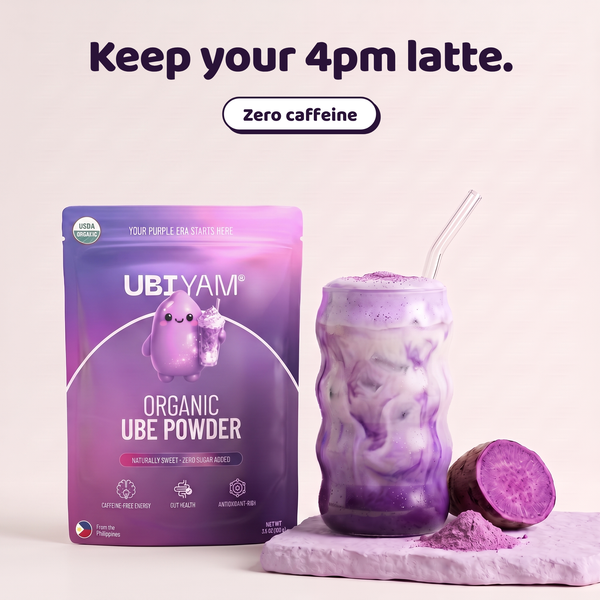
For example, UBIYAM's organic ube powder is designed to make it easy to incorporate ube into drinks, breakfasts, baking, and desserts without having to source and prepare fresh purple yam.
Healthy Ways to Use Ube Powder
One of the advantages of ube powder is its versatility.
You don't have to limit ube to decadent desserts.
Try adding it to:
Smoothies: Blend ube with banana, milk or plant-based milk, yogurt, and your preferred protein source.
Overnight oats: Mix ube powder with oats, chia seeds, milk, and fruit and refrigerate overnight.
Yogurt bowls: Stir a small amount into yogurt and top with berries, nuts, or seeds.
Pancakes: Add ube powder to your pancake batter for naturally purple pancakes.
Chia pudding: Combine ube, chia seeds, and milk for an easy make-ahead breakfast.
Protein shakes: Add ube to vanilla or coconut-based protein shakes.
Lattes: Combine ube powder with warm or iced milk for a caffeine-free purple drink.
Baking: Experiment with ube in muffins, bread, cookies, and cakes.
The key is to consider the entire recipe rather than judging it solely because it contains ube.
Does Ube Have Side Effects?
For most people, ube can be consumed as part of a normal diet.
However, individual dietary needs and reactions vary.
People with allergies, medical conditions, or specific dietary restrictions should pay attention to ingredients in prepared ube products and seek individualized guidance from a qualified healthcare professional when necessary.
This is particularly important with packaged foods because an “ube” product may contain milk, nuts, gluten, sweeteners, or other ingredients unrelated to the yam itself.
So, Is Ube Worth Adding to Your Diet?
Ube isn't a miracle superfood—and it doesn't need to be.
It's a naturally colorful yam that can provide carbohydrates, fiber, micronutrients, and plant compounds while adding an unusual flavor and beautiful purple color to everyday recipes.
The healthiest way to enjoy it is generally to focus on minimally processed forms and pay attention to what is added to them.
If you're buying ube powder, look at the ingredient list rather than simply trusting the purple packaging.
A simple ube powder makes it easier to control the rest of the recipe yourself.
You can decide how much sweetness, milk, protein, fruit, or other ingredients to add.
Frequently Asked Questions About Ube
Is ube a superfood?
“Superfood” isn't a formal nutritional category. Ube is a nutritious plant food containing carbohydrates and various naturally occurring nutrients and plant compounds, but it should be viewed as part of an overall balanced diet rather than a miracle food.
Can you eat ube every day?
Ube can be incorporated regularly into a varied diet. The appropriate amount depends on your overall dietary needs, serving sizes, and how the ube is prepared.
Is ube healthier than regular sweet potato?
There isn't a simple winner. Both can be nutritious foods, and their nutrient profiles differ. Variety is generally more useful than trying to identify one universally “healthier” root vegetable.
Is ube naturally purple?
Yes. Authentic purple ube gets its characteristic color naturally from pigments present in the yam. However, some commercial ube-flavored products may also contain added coloring, so check the ingredient list.
Does ube contain caffeine?
Pure ube is naturally caffeine-free. An ube beverage may contain caffeine if it includes coffee, espresso, matcha, tea, or another caffeinated ingredient.
Is ube powder healthy?
Pure ube powder can be a convenient way to incorporate purple yam into your diet. Its nutritional value depends on the product, serving size, and what you combine it with. Check the label to see whether the product contains pure ube or added sugar and other ingredients.
Final Thoughts
So, is ube healthy?
Ube can certainly be part of a healthy diet.
Its natural purple color, versatility, fiber, carbohydrates, micronutrients, and plant compounds make it much more than just a social-media food trend.
But context matters.
An ube smoothie made with fruit, yogurt, and pure ube powder is nutritionally very different from an oversized ube dessert packed with added sugar.
If you want to experiment with ube at home, choosing a simple, high-quality ube powder gives you control over exactly what goes into your recipes.
Whether you add it to your morning oats, blend it into a smoothie, prepare an iced ube latte, or bake your next batch of purple pancakes, ube offers an easy—and unmistakably colorful—way to introduce something different to your kitchen.
More Ube related topics :
 Organic Ube Powder