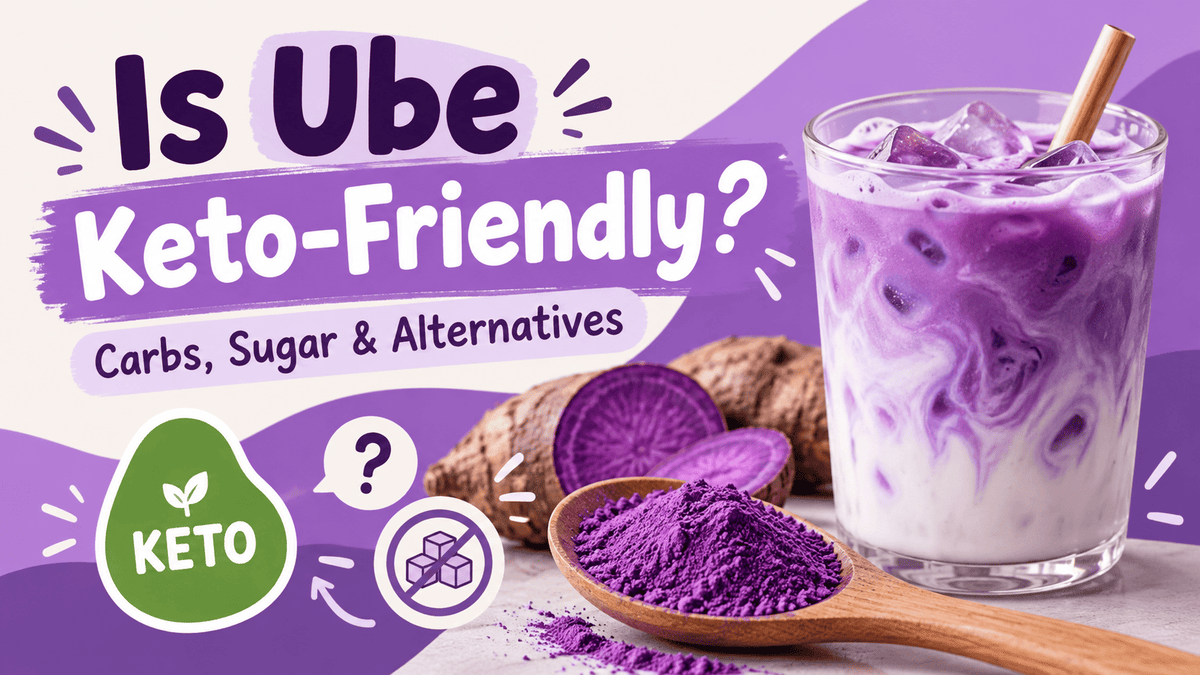
Ube is everywhere these days. From vibrant purple lattes to creamy cheesecakes and colorful pancakes, this Filipino purple yam has become a favorite ingredient among food lovers across the United States.
But if you're following a ketogenic diet, you might be wondering: Is ube keto-friendly? Can you enjoy ube without getting kicked out of ketosis?
The short answer is that traditional ube is relatively high in carbohydrates, making it difficult to fit into a strict keto diet. However, that doesn't mean you have to give up your favorite purple treats entirely.
In this guide, we'll explore ube's carbohydrate content, its natural sugar levels, how it compares with other popular ingredients, and the best ways to enjoy ube-inspired flavors while keeping your carbs under control.
What Is Ube?
Ube (Dioscorea alata), also known as purple yam, is a tropical root vegetable originally cultivated in Southeast Asia and particularly popular in Filipino cuisine.
It's famous for its beautiful purple color, mildly sweet flavor, and subtle nutty, vanilla-like notes.
Traditionally, ube is used in Filipino desserts such as:
-
Ube halaya (purple yam jam)
-
Ube ice cream
-
Ube cakes and cupcakes
-
Ube pandesal
-
Ube milkshakes
-
Ube-flavored pastries
More recently, ube has become increasingly popular in American kitchens, especially in specialty coffee shops and creative baking recipes.
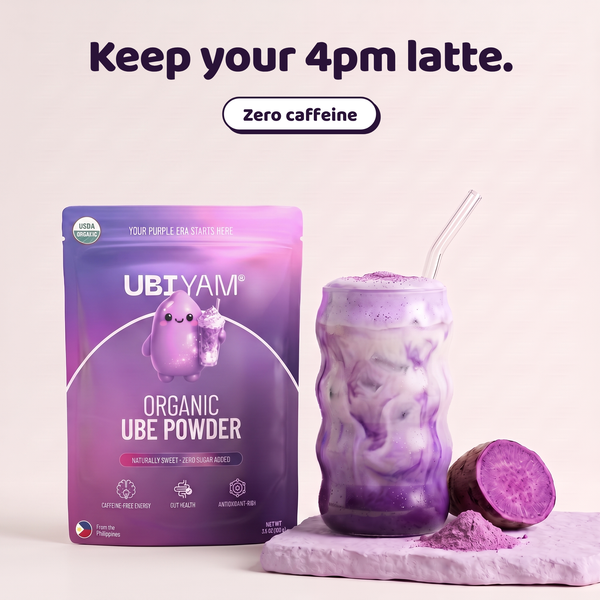
One convenient way to enjoy this ingredient is through organic ube powder, which can be added to smoothies, lattes, baked goods, and homemade desserts.
But how does this colorful ingredient fit into a low-carb lifestyle?
Is Ube Keto-Friendly?
Ube is not generally considered keto-friendly when consumed in regular portions.
The ketogenic diet typically restricts carbohydrate intake to approximately 20–50 grams per day, although individual targets vary.
This carbohydrate restriction encourages the body to use fat and ketones as important energy sources rather than relying primarily on glucose.
Unfortunately, ube is a starchy root vegetable containing substantial amounts of carbohydrates.
Even though it naturally contains fiber, vitamins, and other beneficial plant compounds, its carbohydrate content can quickly consume a significant portion of your daily keto allowance.
However, the quantity matters.
A small amount of ube used for flavor or color may fit into some low-carb meal plans, particularly when the rest of the recipe contains minimal carbohydrates.
The important distinction is between enjoying a small amount of ube and eating a large serving of an ube-based dessert.
Ube Nutrition Facts: How Many Carbs Does Ube Have?
Understanding the nutritional composition of ube is essential when deciding whether it belongs in your keto meal plan.
The following figures are approximate estimates for 100 grams of plain, cooked purple yam. Actual values vary by variety, cooking method, and food composition database.
| Nutrient | Approximate amount |
|---|---|
| Calories | 110–140 kcal |
| Total carbohydrates | 25–33 g |
| Dietary fiber | 3–5 g |
| Net carbohydrates | 21–30 g |
| Protein | 1–2 g |
| Fat | Less than 1 g |
| Naturally occurring sugars | Varies by variety |
Net carbohydrates are commonly calculated by subtracting dietary fiber from total carbohydrates.
For example, if a serving contains 28 grams of total carbohydrates and 4 grams of fiber:
28 g total carbs − 4 g fiber = 24 g net carbs
That single serving could exceed the entire daily carbohydrate target of someone following a strict 20-gram net-carb keto diet.
Keep in mind that ube powder is more concentrated than fresh or cooked ube because much of the water has been removed. Always consult the specific product's nutrition label rather than applying fresh-ube values to dried powder.
Does Ube Contain Sugar?
Yes, ube naturally contains some sugar, but most of its carbohydrates come from starch.
This is an important distinction because naturally occurring sugar and added sugar are not the same thing.
Plain ube contains carbohydrates naturally present in the root vegetable. It does not require added sugar to develop its characteristic mildly sweet flavor.
However, many commercially prepared ube products contain additional sweeteners.
For example, traditional ube halaya often includes sugar, condensed milk, and other ingredients that significantly increase the final carbohydrate content.
Similarly, an ube latte purchased from a coffee shop may contain sweetened syrups, flavored milk, or dessert toppings.
If you're monitoring your carbohydrate intake, check the entire recipe rather than focusing only on the ube itself.
A product labeled "ube-flavored" isn't necessarily made with pure ube, and a product made with real ube isn't automatically low in carbohydrates.
Ube vs. Sweet Potato vs. Taro: Which Is Better for Keto?
Ube is frequently compared with sweet potatoes and taro because all three are starchy root vegetables used in cooking and desserts.
Although they differ in flavor, texture, and nutritional composition, none is particularly suitable as a large carbohydrate source on a strict ketogenic diet.
| Root vegetable | Approximate total carbs per 100 g | Keto suitability |
|---|---|---|
| Ube (purple yam) | 25–33 g | Limited portions |
| Sweet potato, cooked | 18–21 g | Limited portions |
| Taro, cooked | 30–35 g | Generally difficult to fit |
| Cauliflower, cooked | 4–5 g | More keto-friendly |
Values are approximate and depend on variety and preparation.
Cauliflower is a much more practical alternative for savory keto recipes because it contains substantially fewer carbohydrates.
However, if you're preparing purple desserts, cauliflower won't reproduce ube's signature flavor.
That's where careful ingredient selection and portion control become useful.
Read also : Purple Potatoes vs Ube: What's the Difference?
Can You Eat Ube on a Low-Carb Diet?
Yes, potentially.
A low-carb diet is not necessarily the same as a ketogenic diet.
Some people follow a moderately low-carb eating pattern that allows more carbohydrates than strict keto.
Under these circumstances, a small portion of ube may fit into the day's overall carbohydrate allowance.
Here are three practical strategies.
1. Reduce Your Serving Size
Instead of using a large quantity of cooked ube in a dessert, experiment with smaller amounts.
This allows you to enjoy some of its natural flavor while reducing the overall carbohydrate contribution.
2. Combine Ube With Lower-Carb Ingredients
Consider pairing small amounts of ube with ingredients such as unsweetened almond milk, chia seeds, coconut cream, or almond flour.
These ingredients can help create recipes with fewer carbohydrates than conventional versions made with sweetened condensed milk, regular flour, or added sugar.
3. Track Your Total Daily Carbohydrates
Rather than assuming a recipe is keto-friendly, calculate its total net carbohydrates.
Remember to include milk, sweeteners, toppings, and any other ingredients.
Even a small amount of ube can contribute meaningful carbohydrates when combined with several other ingredients.
Is Ube Powder Keto-Friendly?
Ube powder is a convenient ingredient for preparing colorful drinks, desserts, and baked goods.
However, pure ube powder is not inherently keto-friendly simply because it's natural or contains no added sugar.
Drying ube removes much of its water, concentrating the carbohydrates into a smaller weight.
That means a tablespoon of ube powder and a tablespoon of cooked ube cannot be treated as nutritionally equivalent.
For accurate carbohydrate tracking, use the nutrition facts and serving size printed on the powder's packaging.
If you're interested in experimenting with authentic purple yam recipes, UBIYAM offers organic ube powder designed for home cooking, drinks, and baking.
Its convenience makes it easier to measure consistent amounts in recipes.
However, whether a particular serving fits your ketogenic diet depends on its carbohydrate content and your individual daily limit.
5 Keto-Friendly Alternatives to Traditional Ube Desserts
If you love the appearance or flavor profile of ube desserts but want to reduce carbohydrates, several substitutions can help.
1. Unsweetened Almond Milk
<image-placeholder>Glass of purple-inspired latte with unsweetened almond milk</image-placeholder>
Regular sweetened milk drinks can contain considerable carbohydrates.
Unsweetened almond milk usually contains fewer carbohydrates than dairy milk, making it useful for low-carb lattes and smoothies.
You can combine it with keto-compatible sweeteners and a carefully measured amount of ube, if your carbohydrate allowance permits.
2. Almond Flour
Traditional ube cakes frequently use wheat flour, which adds carbohydrates.
Almond flour provides a lower-carb alternative for cakes, muffins, and cookies.
Although almond flour changes the texture of baked goods, it can work well in recipes specifically developed for low-carb baking.
3. Coconut Cream
Coconut cream can add richness to desserts without relying on sweetened condensed milk.
Choose an unsweetened version and check the nutrition label, since carbohydrate levels differ among products.
4. Keto-Compatible Sweeteners
Sugar substitutes such as stevia, monk fruit sweetener, and erythritol can help reduce added sugar in homemade desserts.
Choose products without high-carb fillers and use the quantity recommended for your recipe.
Remember that replacing sugar does not remove the carbohydrates naturally present in ube.
5. Natural Purple Coloring
If you're mainly interested in the vibrant purple appearance, a suitable food-grade purple coloring may provide a lower-carb alternative to using substantial quantities of purple yam.
Some butterfly pea flower preparations can create blue-to-purple tones, depending on acidity.
However, these alternatives won't provide the same authentic flavor as real ube.
How to Make a Lower-Carb Ube-Inspired Latte
One of the easiest ways to experiment with ube while limiting carbohydrates is to prepare your own latte.
Ingredients
-
1 cup unsweetened almond milk
-
A small, measured quantity of pure ube powder
-
1–2 teaspoons keto-compatible sweetener, adjusted to taste
-
¼ teaspoon vanilla extract
-
Ice cubes, optional
-
A pinch of cinnamon, optional
Instructions
-
Warm a small portion of the almond milk.
-
Whisk the ube powder into the warm liquid until smooth.
-
Add the sweetener and vanilla extract.
-
Stir in the remaining almond milk.
-
Serve warm or pour over ice for a refreshing iced latte.
Important: This is a lower-carb recipe concept, not a guaranteed keto recipe. Its final carbohydrate content depends on the exact amount and nutrition profile of the ube powder you use.
For a strict keto diet, calculate the net carbs before preparing your drink.
Does Ube Kick You Out of Ketosis?
Ube does not automatically end ketosis simply because you eat it.
Whether your body remains in ketosis depends on factors including total carbohydrate intake, portion size, activity level, and individual metabolic response.
For example, someone consuming a large serving of ube dessert with added sugar may exceed their daily carbohydrate limit.
On the other hand, someone using a very small quantity of ube powder within a carefully calculated meal plan may remain within their target.
There is no universal serving size that guarantees ketosis for everyone.
This is why measuring ingredients and monitoring your overall carbohydrate intake is more reliable than labeling individual foods as completely forbidden or universally safe.
Frequently Asked Questions
Is purple yam lower in carbs than regular potatoes?
Not necessarily. Ube is a starchy vegetable, and its carbohydrate content can be similar to or higher than that of some potato varieties, depending on preparation and serving size.
Is ube ice cream keto-friendly?
Most traditional ube ice creams are not keto-friendly because they combine carbohydrates from ube with added sugar and dairy ingredients. Lower-carb homemade versions may be possible with substitutions.
Can diabetics eat ube?
People with diabetes may be able to include ube in a balanced eating plan, but portion size and total carbohydrate content matter. Individual dietary recommendations should be discussed with a qualified healthcare professional.
Is ube healthier than regular sugar?
Ube is a whole-food ingredient that provides starch, fiber, and other nutrients, whereas table sugar provides primarily simple carbohydrates. However, ube should not be treated as a sugar-free ingredient or an unrestricted substitute for sugar.
Can I drink an ube latte while following keto?
Possibly, if you prepare it with low-carb ingredients and use an amount of ube that fits your daily carbohydrate target. Many commercially prepared ube lattes contain added sugars, so checking ingredients is important.
Final Verdict: Is Ube Worth Eating on Keto?
Ube is a flavorful, versatile purple yam with a distinctive place in Filipino cuisine.
It offers natural color, a mildly sweet taste, and nutrients found in root vegetables.
However, its relatively high starch content means ube is generally not a practical staple for strict ketogenic diets.
If you're following a moderately low-carb lifestyle, you may still enjoy small portions by carefully tracking your carbohydrate intake.
For those who love ube's authentic taste, using measured amounts of pure ube powder in homemade recipes offers greater control than relying on heavily sweetened commercial desserts.
Explore UBIYAM's organic ube powder and discover creative ways to incorporate real purple yam into your favorite drinks and recipes.
The bottom line: Ube may be nutritious and delicious, but keto compatibility depends on portion size, preparation, and your overall daily carbohydrate allowance.
Related Ube topics :
 Organic Ube Powder