
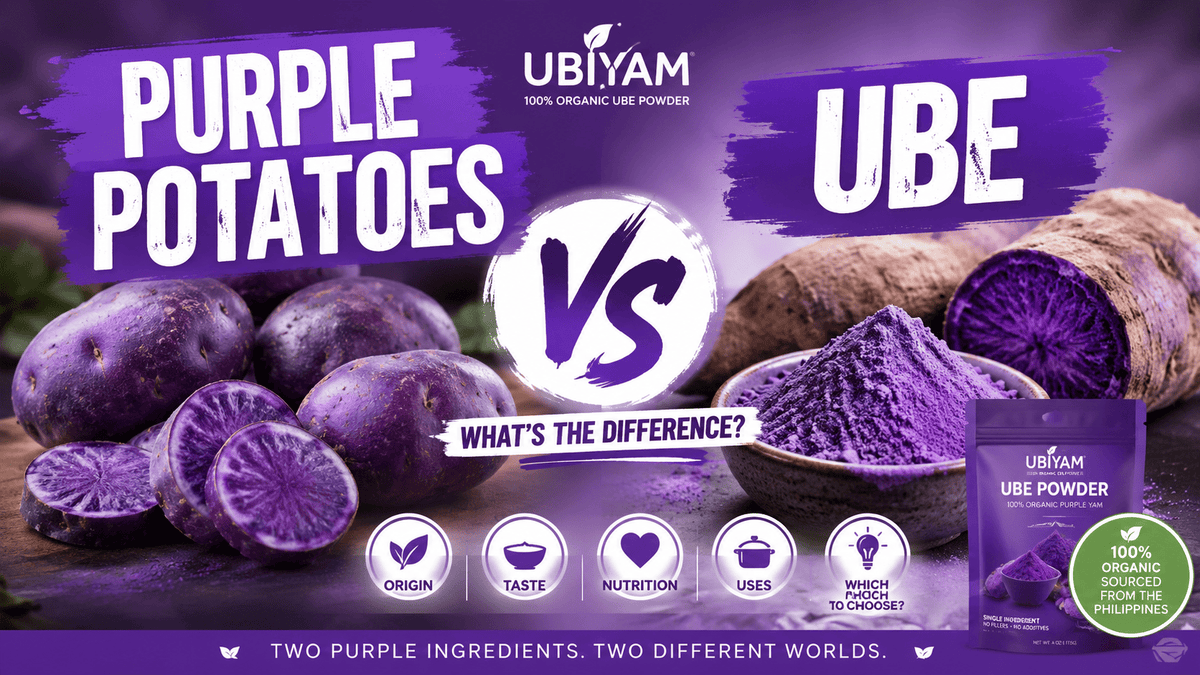
Purple-colored vegetables have become increasingly popular among home cooks and health-conscious consumers. Their vibrant appearance, unique flavors, and impressive nutritional profiles make them stand out from traditional ingredients. Among the most commonly confused purple foods are purple potatoes and ube.
Although they share a striking purple color, purple potatoes and ube are entirely different vegetables. They come from different plant families, have distinct flavors and textures, and are used in different types of recipes.
In this guide, we'll explain everything you need to know about purple potatoes and ube, including their origins, nutrition, health benefits, cooking methods, and which one might be the better choice for your favorite recipes.
What Are Purple Potatoes?
Purple potatoes are varieties of potatoes with naturally purple skin, purple flesh, or both. They belong to the same species as regular potatoes (Solanum tuberosum) but contain high levels of natural pigments called anthocyanins, which give them their rich purple color.
Popular varieties include:
-
Purple Majesty
-
Purple Viking
-
All Blue Potato
-
Adirondack Blue
Purple potatoes have a mild, earthy flavor that is similar to traditional white potatoes, although some varieties have a slightly nuttier taste. Their texture is creamy yet firm, making them suitable for roasting, boiling, mashing, grilling, and baking.
What Is Ube?
Ube, also known as purple yam, is a tropical root vegetable scientifically known as Dioscorea alata. It is widely grown in the Philippines and throughout Southeast Asia, where it has been enjoyed for generations.
Unlike purple potatoes, ube has a naturally sweet flavor with subtle notes of vanilla, pistachio, and coconut. Its vibrant purple color makes it a favorite ingredient in desserts and beverages.
Today, ube is commonly used in:
-
Cakes
-
Ice cream
-
Cookies
-
Pancakes
-
Mochi
-
Donuts
-
Smoothies
-
Lattes
-
Cheesecakes
-
Bread and pastries
Ube has become increasingly popular worldwide thanks to its unique taste and beautiful color.
Are Purple Potatoes and Ube the Same?
No.
Despite their similar appearance, purple potatoes and ube are completely different vegetables.
| Purple Potatoes | Ube |
|---|---|
| Potato | Purple yam |
| Earthy flavor | Naturally sweet |
| Common in savory dishes | Popular in desserts |
| Native to South America | Native to Southeast Asia |
| Firm texture | Soft and creamy when cooked |
| Potato family | Yam family |
The purple color often causes confusion, but these vegetables differ in nearly every other aspect.
Taste Comparison
Purple Potatoes
Purple potatoes taste very similar to traditional potatoes. Their flavor is mild, earthy, and slightly nutty. They pair well with herbs, butter, garlic, olive oil, meats, and vegetables.
Ube
Ube has a much sweeter flavor profile. Many people describe it as a combination of vanilla, pistachio, coconut, and sweet potato. Because of its natural sweetness, ube is commonly used in baked goods and desserts rather than savory meals.
Appearance
Although both are purple, they look quite different.
Purple potatoes are generally round or oval with smooth skin. Depending on the variety, their flesh may range from lavender to deep violet.
Ube, on the other hand, is longer and more irregular in shape. Its rough outer skin hides an intensely vibrant purple interior that becomes even more vivid when cooked.
Nutritional Comparison
Both vegetables are nutritious additions to a balanced diet.
Purple potatoes provide:
-
Dietary fiber
-
Potassium
-
Vitamin C
-
Vitamin B6
-
Complex carbohydrates
-
Anthocyanin antioxidants
Ube contains:
-
Fiber
-
Vitamin C
-
Potassium
-
Manganese
-
Natural carbohydrates
-
Anthocyanins
Both vegetables are rich in plant compounds that contribute to their distinctive purple color.
Health Benefits
Purple Potatoes
Purple potatoes are valued for their antioxidant content. Anthocyanins may help protect cells from oxidative stress as part of an overall healthy diet.
Additional benefits include:
-
Source of dietary fiber
-
Supports normal digestive health
-
Provides energy from complex carbohydrates
-
Contains potassium for normal muscle and nerve function
Ube
Ube also contains anthocyanins and provides vitamins and minerals that can contribute to a balanced diet.
Potential benefits include:
-
Naturally colorful without artificial dyes
-
Source of dietary fiber
-
Provides vitamins and minerals
-
Versatile ingredient for homemade recipes
Neither food should be considered a cure or treatment for disease, but both can fit into a nutritious eating pattern.
Cooking Uses
Best Uses for Purple Potatoes
Purple potatoes are ideal for savory recipes such as:
-
Roasted potatoes
-
Mashed potatoes
-
Potato wedges
-
French fries
-
Potato salad
-
Soups
-
Gratin
-
Hash browns
Their color often remains vibrant after cooking, making them visually appealing.
Best Uses for Ube
Ube shines in sweet recipes and drinks, including:
-
Ube latte
-
Ube cheesecake
-
Ube pancakes
-
Ube cookies
-
Ube brownies
-
Ube ice cream
-
Ube milkshake
-
Ube smoothie
-
Ube bread
-
Ube mochi
Many home bakers also use ube powder to easily add authentic flavor and color to recipes.
Can You Substitute One for the Other?
Not usually.
Purple potatoes work best in savory recipes, while ube is prized for its sweet flavor and creamy texture.
If a recipe specifically calls for ube, using purple potatoes will change the flavor significantly. Likewise, replacing potatoes with ube in savory dishes may produce unexpectedly sweet results.
Choosing the correct ingredient helps achieve the intended taste and texture.
Which One Is Better?
The answer depends on what you're making.
Choose purple potatoes if you want:
-
Roasted vegetables
-
Mashed potatoes
-
Savory side dishes
-
Potato salads
-
Crispy fries
Choose ube if you're preparing:
-
Desserts
-
Smoothies
-
Lattes
-
Cakes
-
Cookies
-
Ice cream
-
Sweet pastries
Rather than competing with each other, these ingredients serve different culinary purposes.
Where to Find Quality Ube Powder
If you're interested in making authentic ube recipes at home, using high-quality ube powder can be a convenient option. UBIYAM specializes in 100% organic ube (purple yam) powder sourced from the Philippines. Because it's made from a single ingredient with no fillers or artificial additives, it's easy to use in recipes such as ube lattes, smoothies, pancakes, cakes, breads, and desserts. Whether you're trying ube for the first time or expanding your collection of purple-inspired recipes, a premium ube powder can help you achieve consistent flavor and vibrant color.
Frequently Asked Questions
Is ube a potato?
No. Ube is a purple yam, while purple potatoes are true potatoes.
Why are both vegetables purple?
Both contain natural pigments called anthocyanins, which are responsible for their vibrant purple color.
Which one is sweeter?
Ube is naturally much sweeter than purple potatoes.
Can I use purple potatoes to make ube desserts?
No. Purple potatoes lack the distinctive sweet, vanilla-like flavor that makes ube unique.
Are both healthy?
Both can be part of a balanced diet and provide fiber, vitamins, minerals, and naturally occurring antioxidants.
Final Thoughts
Purple potatoes and ube may look similar at first glance, but they offer completely different culinary experiences. Purple potatoes are perfect for savory dishes, while ube brings a naturally sweet flavor and vibrant color to desserts and beverages.
Understanding the differences helps you choose the right ingredient for your recipes. Whether you're roasting colorful potatoes for dinner or baking a delicious ube cheesecake, each ingredient has its own unique place in the kitchen. Exploring both can add variety, flavor, and visual appeal to your meals.
More interesting articles to read :
 Organic Ube Powder


