
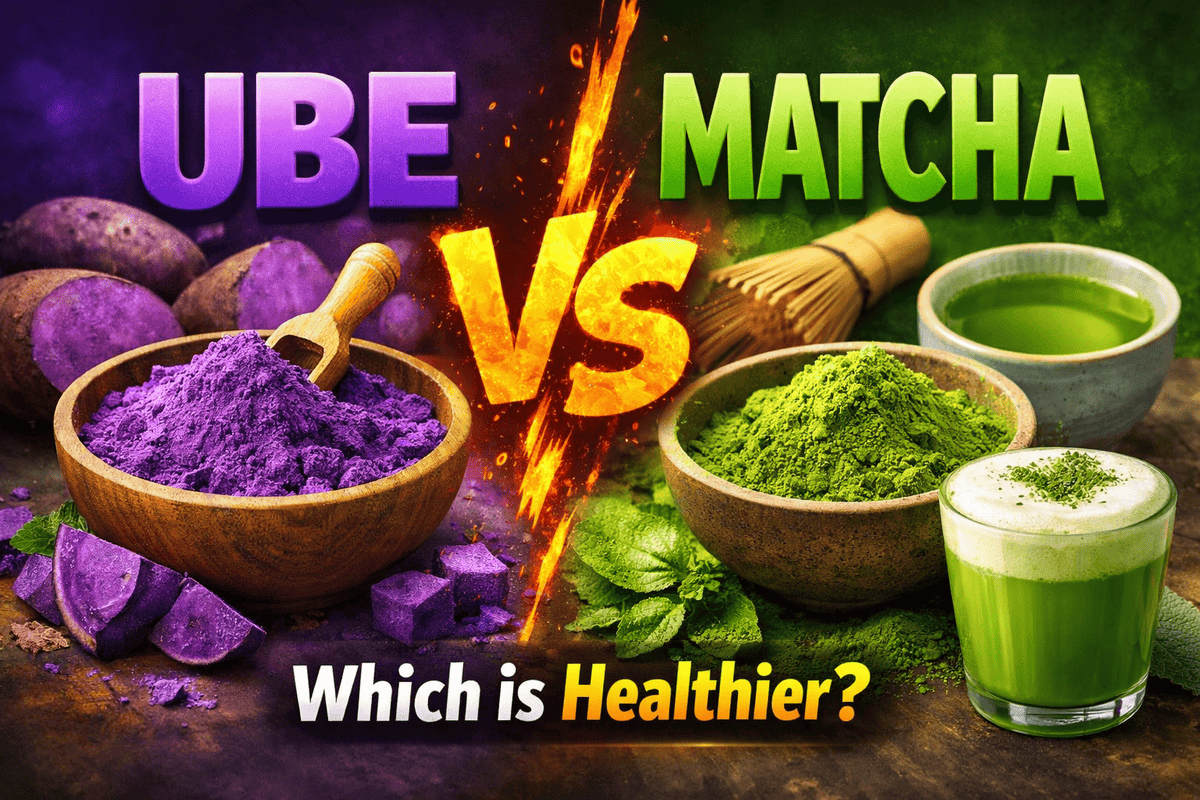
In recent years, the wellness world has seen a surge in vibrant, nutrient-rich superfoods. Among the most popular are ube (purple yam) and matcha (powdered green tea)—two colorful ingredients that dominate social media feeds, cafés, and health blogs alike.
But beyond their aesthetic appeal, many people are asking an important question:
Which is actually healthier—ube or matcha?
In this in-depth comparison, we’ll break down their nutritional profiles, health benefits, energy effects, and best use cases to help you decide which one deserves a place in your daily routine.
🌿 What Is Ube?
Ube is a purple yam traditionally grown in the Philippines. Known for its vibrant violet color and naturally sweet, nutty flavor, ube has long been used in desserts—but today, it’s gaining popularity as a functional superfood.
When dried and ground into powder, ube becomes a versatile ingredient that can be added to drinks, smoothies, or baked goods.
Key characteristics:
- Naturally caffeine-free
- Rich in fiber and complex carbohydrates
- High in antioxidants (especially anthocyanins)
- Naturally sweet (no added sugar needed)
🍵 What Is Matcha?
Matcha is a finely ground powder made from specially grown green tea leaves. Unlike regular tea, where leaves are steeped and discarded, matcha involves consuming the entire leaf—making it highly concentrated in nutrients.
It has been a staple in Japanese culture for centuries and is now widely consumed for its energy-boosting and calming effects.
Key characteristics:
- Contains caffeine
- Rich in antioxidants (catechins)
- Provides calm, focused energy
- Slightly bitter, earthy taste
🥗 Nutritional Comparison
Let’s start by comparing their basic nutritional value:
Ube (Purple Yam Powder)
- High in complex carbohydrates
- Good source of dietary fiber
- Contains vitamin C, potassium, and antioxidants
- Naturally low in fat
- No caffeine
Matcha (Green Tea Powder)
- Low in calories
- Contains caffeine (about 30–70 mg per serving)
- Rich in EGCG (a powerful antioxidant)
- Contains L-theanine (promotes calm focus)
- Minimal fiber
👉 Verdict:
- Ube is more nutrient-dense and filling
- Matcha is more concentrated in specific antioxidants
⚡ Energy: Stable vs Stimulating
One of the biggest differences between ube and matcha lies in how they affect your energy levels.
Ube: Slow, Steady Energy
Ube provides energy through complex carbohydrates, which digest slowly and release glucose gradually into the bloodstream.
Benefits:
- No energy crash
- Sustained fuel throughout the day
- Ideal for mornings or workouts
Matcha: Calm but Stimulating Energy
Matcha contains caffeine, but thanks to L-theanine, it delivers a more balanced energy boost compared to coffee.
Benefits:
- Improved focus and alertness
- Less jittery than coffee
- Mild crash possible
👉 Verdict:
- Choose ube for long-lasting, crash-free energy
- Choose matcha for mental focus and productivity
🧠 Antioxidants: Who Wins?
Both ube and matcha are rich in antioxidants—but they contain different types.
Ube Antioxidants
- Anthocyanins (also found in blueberries)
- Help fight inflammation
- Support heart health and skin health
Matcha Antioxidants
- EGCG (epigallocatechin gallate)
- Linked to fat burning and metabolism
- Strong anti-inflammatory effects
👉 Verdict:
- Matcha has higher antioxidant concentration
- Ube offers broader nutritional benefits
🦠 Gut Health & Digestion
Ube is rich in dietary fiber, which supports digestion and promotes healthy gut bacteria.
Benefits:
- Improves digestion
- Reduces bloating
- Supports long-term gut health
Matcha: Limited Gut Benefits
Matcha contains antioxidants but lacks fiber, meaning it doesn’t directly support digestion in the same way.
👉 Verdict:
Ube is clearly the better option for gut health and digestion
⚖️ Weight Loss & Metabolism
Matcha is often associated with weight loss due to its caffeine and EGCG content, which may boost metabolism.
Benefits:
- May increase calorie burning
- Helps with focus during workouts
Ube for Satiety
Ube doesn’t directly burn fat but helps with weight management by keeping you full longer.
Benefits:
- Reduces cravings
- Stabilizes blood sugar
- Prevents overeating
👉 Verdict:
- Matcha = fat burning support
- Ube = appetite control & sustainable weight loss
😴 Sleep & Stress Impact
Since it contains no caffeine, ube can be consumed at any time—even in the evening.
Benefits:
- No sleep disruption
- Gentle on the nervous system
Matcha: Can Affect Sleep
Despite being calmer than coffee, matcha still contains caffeine, which may impact sleep if consumed late.
👉 Verdict:
Ube is better for relaxation and evening consumption
🍽️ Taste & Versatility
Ube
- Naturally sweet and creamy
- Great for desserts, lattes, smoothies
- No need for added sugar
Matcha
- Earthy, slightly bitter taste
- Works well in teas, lattes, and desserts
- Often requires sweetener
👉 Verdict:
Ube is generally more accessible and enjoyable for beginners
🛒 Choosing Quality Matters

Not all ube or matcha products are created equal.
For ube in particular, quality depends on:
- Authentic sourcing
- No additives or fillers
- Proper drying and processing
A great example is UBIYAM, a premium brand that focuses on 100% pure ube powder sourced directly from the Philippines. Their product stands out for its clean ingredient profile and vibrant color, making it ideal for anyone looking to incorporate ube into a healthy lifestyle. Whether you’re making a latte, smoothie, or dessert, using a high-quality source like this ensures you get the full nutritional and taste benefits of ube without unnecessary additives.
🧾 Final Verdict: Which Is Healthier?
So, which one wins?
👉 The answer depends on your goals.
Choose Ube if you want:
- Stable, long-lasting energy
- Better digestion and gut health
- A caffeine-free lifestyle
- Natural sweetness without sugar
Choose Matcha if you want:
- Improved focus and alertness
- Higher antioxidant concentration
- Support for metabolism and fat burning
🏆 Overall Winner?
If we’re talking about overall health and daily use, ube has a slight edge because it offers:
✔ More balanced nutrition
✔ No caffeine side effects
✔ Better digestion support
✔ More versatility in recipes
However, matcha remains a powerful option for productivity and mental focus.
💡 Final Thought
Instead of choosing one over the other, many people are now incorporating both into their routine:
- ☀️ Matcha in the morning for focus
- 🌙 Ube later in the day for sustained energy and relaxation
This way, you get the best of both worlds.
More articles to read :
- Why Ube Is Becoming One of the Most Popular Superfoods
- Ube for Energy: A Natural Alternative to Coffee
- How to Make the Perfect Ube Latte at Home
- The Purple Drink Taking Over TikTok (And Why Everyone’s Obsessed)
 Organic Ube Powder


