
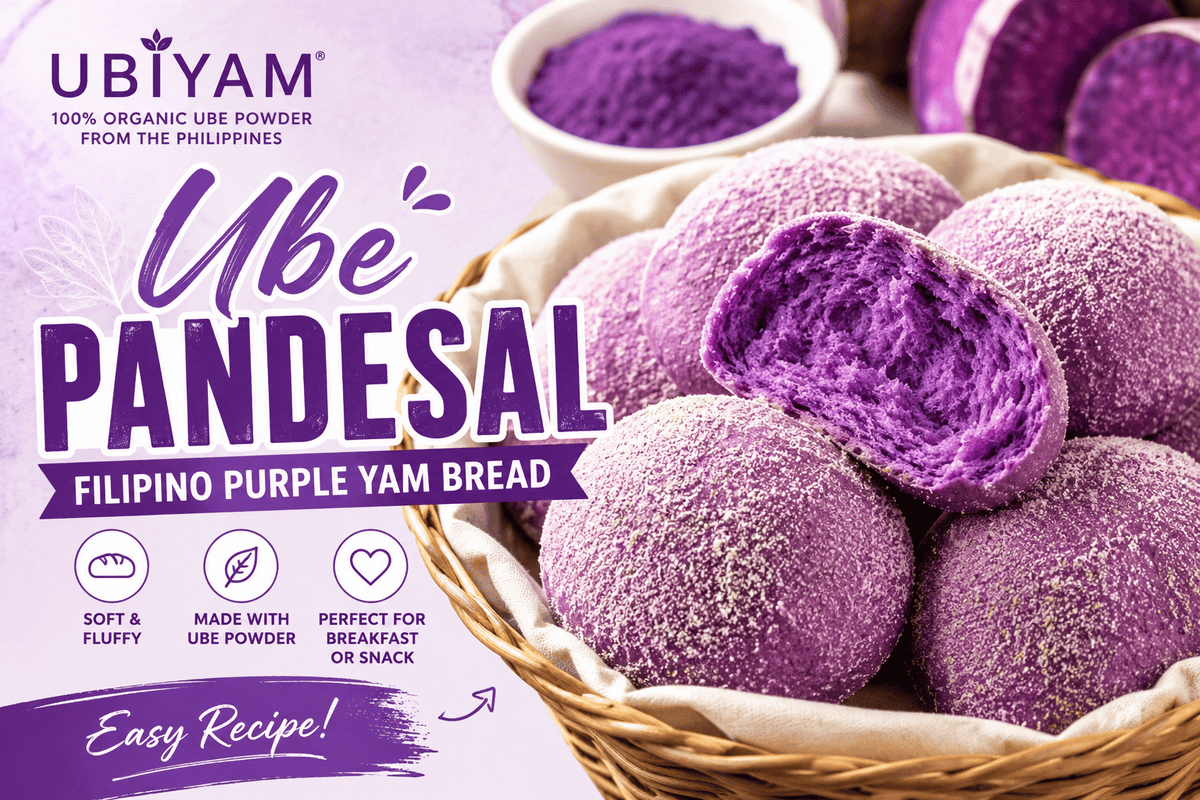
Soft, fluffy, slightly sweet, and beautifully purple, ube pandesal brings together two beloved Filipino flavors in one irresistible bread. Traditional pandesal is already a staple in Filipino households, but adding ube gives this classic bread a colorful twist and a subtly sweet, earthy flavor.
Whether you're familiar with Filipino cuisine or discovering ube for the first time, this ube pandesal recipe is an approachable way to experience the distinctive flavor of purple yam. The rolls are perfect for breakfast, afternoon snacks, dessert, or simply enjoying warm with coffee.
In this guide, you'll learn how to make homemade ube pandesal, how to achieve its characteristic soft texture, and how to use ube powder to make the recipe more convenient.
What Is Ube Pandesal?
Ube pandesal is a variation of pandesal, one of the Philippines' most recognizable breads.
The word pandesal comes from the Spanish phrase meaning "salt bread." Despite the name, modern Filipino pandesal tends to have a mildly sweet flavor. The bread is typically shaped into small rolls, coated with breadcrumbs, and baked until lightly golden.
Ube pandesal incorporates ube, or purple yam, into the dough.
Ube is particularly associated with Filipino desserts, where it is used in everything from cakes and ice cream to pastries and the traditional dessert ube halaya. Its naturally purple appearance makes ube recipes instantly recognizable.
Combining ube with pandesal produces a fluffy purple bread with a mild sweetness that works beautifully for breakfast or dessert.
What Does Ube Pandesal Taste Like?
Ube has a flavor that can be difficult to compare directly with other ingredients.
It is mildly sweet and earthy, with subtle nutty and vanilla-like characteristics. When incorporated into bread dough, the flavor tends to be gentle rather than overwhelming.
Pandesal itself is soft, slightly sweet, and yeasty.
Together, they create bread that tastes familiar enough for everyday eating while still having the distinctive character associated with Filipino ube desserts.
Depending on your preference, you can serve ube pandesal plain or add fillings such as cheese or ube spread.
Why Use Ube Powder?
Traditional ube recipes often begin with fresh or frozen purple yam. While delicious, fresh ube isn't always easy to find, especially outside the Philippines.
Ube powder provides a convenient alternative.
Because it is shelf-stable and easy to measure, ube powder can be particularly useful for baking. You don't have to peel, cook, mash, and prepare a whole purple yam every time you want to make an ube recipe.
The powder can be rehydrated or incorporated into recipes depending on the product and preparation method.
It also makes it easier to experiment with ube in bread, pancakes, cakes, cookies, smoothies, and other dishes.
Ingredients for Ube Pandesal
For approximately 12–16 rolls, you'll need:
For the dough
-
3½ cups all-purpose flour
-
¼ cup ube powder
-
¼ cup granulated sugar
-
2¼ teaspoons active dry yeast
-
¾ cup warm milk
-
1 large egg
-
¼ cup unsalted butter, softened
-
1 teaspoon salt
-
1 teaspoon vanilla extract
-
½ teaspoon ube extract, optional
-
¼ to ½ cup breadcrumbs for coating
Optional filling
You can also add:
-
Ube halaya
-
Cream cheese
-
Cheddar cheese
-
Mozzarella
-
Ube spread
A cheese filling creates a particularly interesting contrast between the mildly sweet bread and salty, creamy center.
How to Make Ube Pandesal
Step 1: Activate the Yeast
Warm the milk until it is lukewarm rather than hot.
Add the yeast and approximately one teaspoon of the sugar. Stir gently and leave the mixture for about 5–10 minutes.
You should see foam beginning to form on the surface.
This indicates that the yeast is active.
Avoid using very hot milk because excessive heat can damage the yeast and prevent the dough from rising properly.
Step 2: Prepare the Dry Ingredients
In a large mixing bowl, combine:
-
Flour
-
Ube powder
-
Remaining sugar
-
Salt
Whisk everything together until evenly distributed.
Breaking up any small lumps in the ube powder at this stage will help produce a more uniform dough.
Step 3: Add the Wet Ingredients
Add the activated yeast mixture, egg, softened butter, and vanilla extract to the dry ingredients.
If you're using ube extract, add it now.
Mix until a rough dough forms.
The dough may initially feel sticky. Avoid immediately adding large amounts of extra flour because too much flour can result in dense pandesal.
Step 4: Knead the Dough
Transfer the dough to a lightly floured surface.
Knead for approximately 8–10 minutes, or until the dough becomes smooth and elastic.
You can also use a stand mixer fitted with a dough hook.
When properly kneaded, the dough should feel soft and slightly tacky without sticking excessively to your hands.
Step 5: Let the Dough Rise
Lightly grease a clean bowl and place the dough inside.
Cover it with a kitchen towel or plastic wrap.
Allow the dough to rise in a warm place for approximately 60–90 minutes, or until it has roughly doubled in size.
Rising time can vary depending on room temperature.
A warmer kitchen generally results in faster fermentation.
Step 6: Shape the Ube Pandesal
Once the dough has doubled, gently press it down to release excess gas.
Divide the dough into approximately 12–16 equal pieces.
Roll each portion into a smooth ball.
If you're making filled ube pandesal, flatten each piece slightly and place a small amount of your chosen filling in the center.
Bring the edges together and pinch them securely before rolling the dough back into a ball.
Be careful not to overfill the rolls, as the filling may leak during baking.
Step 7: Coat With Breadcrumbs
Traditional pandesal is recognizable by its breadcrumb coating.
Place breadcrumbs in a shallow bowl.
Gently roll each dough ball through the breadcrumbs until the outside is lightly covered.
Arrange the rolls on a parchment-lined baking sheet, leaving some space between them.
Step 8: Second Rise
Cover the shaped rolls loosely and allow them to rise again for approximately 30–45 minutes.
This second proof is important for producing light, fluffy bread.
Meanwhile, preheat your oven to 350°F (175°C).
Step 9: Bake
Bake the ube pandesal for approximately 15–20 minutes.
The exact baking time depends on the size of your rolls and your oven.
The tops should be lightly golden while the inside remains soft.
Avoid overbaking because pandesal is best when tender and fluffy.
Allow the rolls to cool for several minutes before serving.
Tips for Making Soft and Fluffy Ube Pandesal
Great homemade bread depends as much on technique as ingredients.
First, don't add too much flour. A slightly tacky dough generally produces softer bread than an excessively dry dough.
Second, give the yeast enough time to work. Trying to accelerate the rising process can result in dense rolls.
Your dough should visibly increase in volume before you proceed.
Third, knead thoroughly. Kneading develops gluten, which helps the bread trap the gases produced during fermentation.
Finally, avoid overbaking. Even a few additional minutes can significantly change the texture of small bread rolls.
Ube Pandesal With Cheese
One of the most popular variations is ube cheese pandesal.
The combination works surprisingly well.
Ube provides gentle sweetness, while cheese contributes saltiness and richness.
To make it, simply place a small cube of cheese in the center of each dough portion before shaping.
Cheddar is a convenient option because of its stronger flavor, although cream cheese and mozzarella can also work.
For an even richer version, combine a little ube spread with cheese inside each roll.
Ube Pandesal With Ube Filling
For stronger ube flavor, fill your pandesal with ube halaya.
Flatten each dough ball and add approximately one teaspoon of ube halaya in the center.
Seal the dough carefully before coating it in breadcrumbs.
When you break open the finished bread, you'll have fluffy ube bread surrounding a creamy purple center.
This variation works especially well as a dessert or sweet afternoon snack.
Where to Find Quality Ube Powder
The quality of your ube ingredient can make a noticeable difference when preparing Filipino-inspired recipes.
UBIYAM offers organic ube powder sourced from the Philippines, making it a convenient option for anyone who wants to explore authentic ube recipes without having to source and prepare fresh purple yam. UBIYAM's ube powder contains a single ingredient and is designed to be versatile enough for breads, smoothies, lattes, cakes, pancakes, and traditional-inspired desserts. If ube pandesal inspires you to experiment with more purple-yam recipes.
How to Serve Ube Pandesal
Fresh ube pandesal is excellent while still slightly warm.
You can eat it plain or serve it with:
-
Butter
-
Cream cheese
-
Ube halaya
-
Coconut spread
-
Peanut butter
-
Cheese
-
Coffee
-
Tea
-
An ube latte
For breakfast, try warming a roll and spreading a small amount of butter inside.
For dessert, serve filled ube pandesal alongside coffee or a cold glass of milk.
How to Store Ube Pandesal
Homemade pandesal tastes best fresh, but leftovers can be stored.
Place completely cooled rolls inside an airtight container and keep them at room temperature for approximately 2–3 days.
If you want to keep them longer, freeze them.
Wrap individual rolls or place them in a freezer-safe container. When you're ready to eat one, allow it to thaw and briefly warm it in the oven or microwave.
Warming the bread helps restore some of its original softness.
Can You Make Ube Pandesal Without Ube Extract?
Yes.
Ube extract is often used in recipes to intensify both flavor and purple color, but it isn't essential.
Using quality ube powder means the bread already contains actual purple yam.
Without extract, however, the final bread may have a more muted, natural purple appearance.
This isn't necessarily a disadvantage. If your priority is using simpler ingredients, you can leave the extract out entirely.
Can You Make Ube Pandesal With Plant-Based Milk?
Yes. You can substitute dairy milk with an unsweetened plant-based alternative such as oat, almond, or soy milk.
Keep in mind that different milk alternatives may slightly change the flavor and texture.
For a fully vegan recipe, you would also need to replace the egg and butter with appropriate plant-based alternatives.
Why Has Ube Become So Popular?
Ube has deep roots in Filipino cuisine, but its international popularity has expanded considerably.
Its striking purple appearance certainly contributes to its appeal, especially in visually distinctive desserts and drinks.
However, ube is more than simply a colorful ingredient.
Its recognizable flavor and versatility allow it to work in both traditional Filipino recipes and newer creations such as ube lattes, pancakes, cookies, cheesecakes, and smoothies.
Ube pandesal is a great example of how the ingredient can transform an everyday food into something memorable.
Frequently Asked Questions
Is ube the same as taro?
No. Ube and taro are different plants.
Ube is a purple yam commonly associated with Filipino cuisine. Taro typically has lighter flesh with purple flecks and has a different flavor and texture.
Can I use ube powder for baking?
Yes. Ube powder can be incorporated into numerous baked recipes, including bread, cakes, pancakes, cookies, and muffins.
Follow the preparation instructions for the particular powder you're using, since concentration and processing methods can vary between products.
Why isn't my ube pandesal bright purple?
Natural ube can vary in color.
Many extremely vivid purple desserts use additional ube extract or coloring. Bread made primarily with ube powder may have a softer, more natural purple tone.
Why is my pandesal dense?
Dense pandesal can result from insufficient kneading, inactive yeast, adding too much flour, or not giving the dough enough time to rise.
Can I freeze ube pandesal?
Yes. Allow the bread to cool completely before freezing it in an airtight freezer-safe container. Reheat before serving for the best texture.
Final Thoughts
Ube pandesal combines the comforting texture of Filipino bread with the distinctive flavor and appearance of purple yam.
It's soft enough for breakfast, sweet enough for dessert, and versatile enough to customize with cheese, cream cheese, or ube halaya.
Using ube powder also makes the recipe accessible to people who may not have fresh purple yam available locally.
Once you've mastered homemade ube pandesal, you can use the same ingredient to explore an entire world of purple-yam recipes—from ube lattes and pancakes to cakes, cookies, smoothies, and classic Filipino-inspired desserts.
Serve your freshly baked rolls warm, pair them with your favorite drink, and enjoy one of the most colorful ways to experience the flavor of ube.
More Ube recipes to discover :
 Organic Ube Powder


