
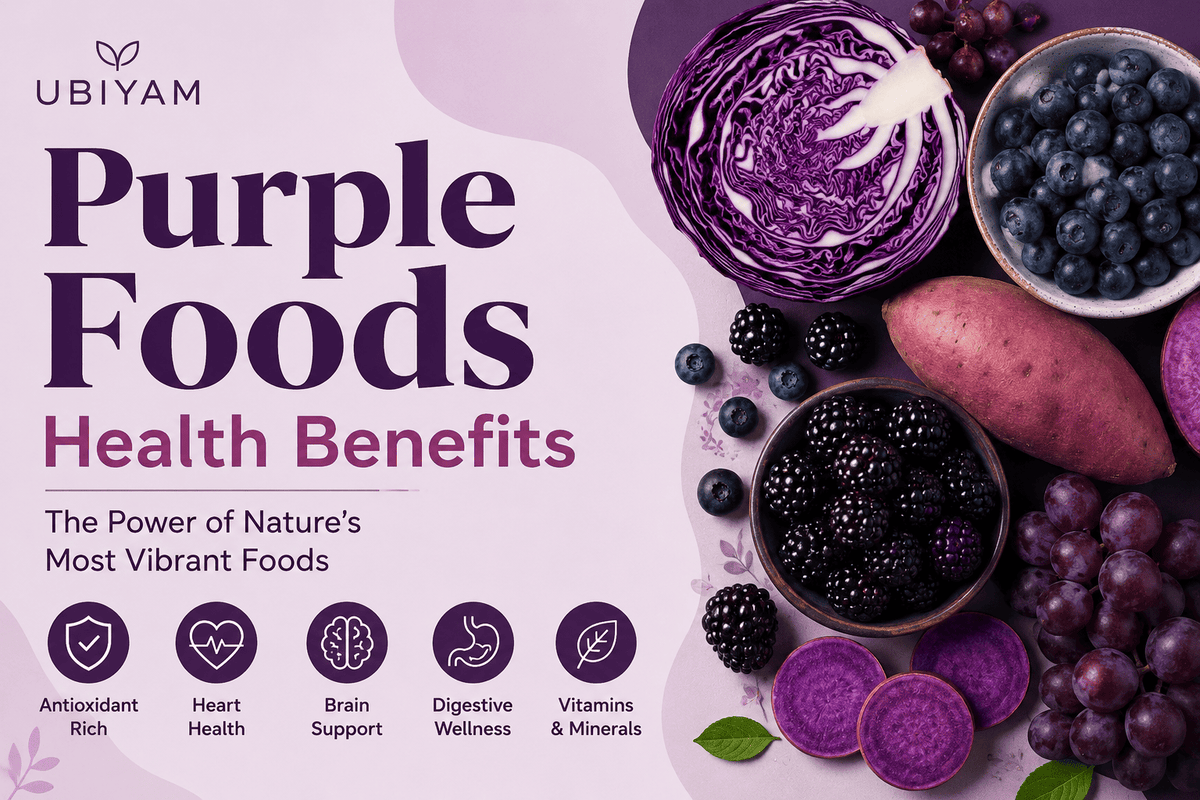
Walk through the produce aisle, and you'll find a rainbow of fruits and vegetables. While every color offers unique nutritional benefits, purple foods have gained particular attention among nutrition experts and wellness enthusiasts. From blueberries and blackberries to purple cabbage and ube, these vibrant foods are packed with compounds that may support overall health and well-being.
But what makes purple foods so special?
The answer lies in their rich concentration of antioxidants, vitamins, minerals, and plant compounds that give them their distinctive color. Adding more purple foods to your diet can be an easy and delicious way to increase nutrient intake while enjoying a variety of flavors and textures.
In this article, we'll explore the health benefits of purple foods, examine some of the most popular options, and discover simple ways to include them in your daily meals.
What Gives Purple Foods Their Color?
The deep purple, blue, and violet hues found in many fruits and vegetables come primarily from compounds called anthocyanins.
Anthocyanins belong to a group of plant compounds known as flavonoids. These natural pigments not only create beautiful colors but also serve important protective functions within plants. For humans, anthocyanins have attracted scientific interest because of their antioxidant properties.
Purple foods may also contain other beneficial compounds, including:
-
Polyphenols
-
Vitamin C
-
Fiber
-
Potassium
-
Manganese
-
Various phytonutrients
Together, these nutrients contribute to the many potential health benefits associated with purple foods.
1. Rich in Antioxidants
One of the most celebrated benefits of purple foods is their high antioxidant content.
Antioxidants help protect cells from oxidative stress caused by free radicals. Free radicals are unstable molecules produced during normal metabolism and exposure to environmental factors such as pollution and UV radiation.
When oxidative stress accumulates over time, it may contribute to aging and various health concerns.
Purple foods such as blueberries, blackberries, purple grapes, and purple sweet potatoes contain significant amounts of antioxidants that help support the body's natural defense systems.
Including a variety of antioxidant-rich foods in your diet can help maintain overall health and support long-term wellness.
2. Support Heart Health
Many purple foods contain nutrients that may support cardiovascular health.
Anthocyanins have been studied for their potential role in promoting healthy blood circulation and supporting normal blood vessel function. Additionally, many purple fruits and vegetables contain fiber, which plays an important role in maintaining healthy cholesterol levels as part of a balanced diet.
Examples of heart-friendly purple foods include:
-
Blueberries
-
Blackberries
-
Purple grapes
-
Red cabbage
-
Purple carrots
Combined with regular exercise and healthy lifestyle habits, these foods can contribute to a heart-conscious diet.
3. Promote Healthy Aging
Healthy aging involves supporting the body's natural processes as we grow older.
The antioxidants found in purple foods help combat oxidative stress, one of the factors associated with aging. While no single food can stop aging, a diet rich in colorful fruits and vegetables may help support overall vitality.
Purple foods often provide a combination of:
-
Antioxidants
-
Vitamins
-
Minerals
-
Fiber
This nutritional profile makes them valuable additions to a balanced eating pattern designed to support lifelong health.
4. Support Brain Function
Nutrition plays an important role in cognitive wellness.
Research has explored how anthocyanin-rich foods may help support brain health. Purple berries, in particular, have become popular among health-conscious consumers because of their nutrient density and antioxidant content.
Foods commonly associated with brain-supportive nutrition include:
-
Blueberries
-
Blackberries
-
Purple grapes
-
Acai berries
While no food guarantees improved cognitive performance, a nutrient-rich diet can help support overall brain function as part of a healthy lifestyle.
5. Encourage Digestive Wellness
Many purple fruits and vegetables are excellent sources of dietary fiber.
Fiber supports digestive health by helping maintain regular bowel function and contributing to a healthy gut environment.
Purple foods rich in fiber include:
-
Ube (purple yam)
-
Purple sweet potatoes
-
Blackberries
-
Plums
-
Purple carrots
Fiber also helps promote feelings of fullness, making it an important component of balanced eating habits.
6. Help Maintain Healthy Blood Sugar Levels
Many naturally purple foods contain complex carbohydrates and fiber that can contribute to balanced nutrition.
Fiber helps slow digestion, which may support more gradual absorption of carbohydrates.
Examples include:
-
Purple sweet potatoes
-
Ube
-
Purple carrots
-
Red cabbage
When incorporated into balanced meals alongside protein and healthy fats, these foods can fit well within many healthy eating patterns.
7. Provide Essential Vitamins and Minerals
Purple foods offer more than just antioxidants.
Depending on the specific food, they may also provide:
-
Vitamin C
-
Vitamin K
-
Potassium
-
Manganese
-
Folate
-
Iron
For example, purple cabbage is rich in vitamin C, while purple potatoes provide potassium and vitamin B6.
Eating a variety of purple foods can help diversify nutrient intake and support overall nutritional adequacy.
Popular Purple Foods to Add to Your Diet
Blueberries
Blueberries are among the most popular purple-blue fruits. They are known for their antioxidant content and versatility. Add them to smoothies, oatmeal, yogurt, or enjoy them as a snack.
Blackberries
Blackberries are rich in fiber and vitamin C. Their sweet-tart flavor makes them perfect for smoothies, desserts, and fruit salads.
Purple Grapes
Purple grapes provide antioxidants and natural sweetness. They can be eaten fresh, frozen, or added to salads.
Purple Cabbage
This crunchy vegetable is packed with nutrients and works well in salads, slaws, stir-fries, and wraps.
Purple Sweet Potatoes
Purple sweet potatoes are rich in fiber and anthocyanins. Their naturally sweet flavor makes them a delicious side dish.
Ube (Purple Yam)
Ube is a purple yam native to the Philippines and has become increasingly popular worldwide. Known for its vibrant color and subtly sweet flavor, ube can be enjoyed in lattes, smoothies, baked goods, and desserts.
Its unique nutritional profile and versatility have made it a favorite among health-conscious consumers looking for new ways to enjoy purple foods.
Easy Ways to Eat More Purple Foods
If you're looking to add more color to your diet, here are a few simple ideas:
Start Your Day with Purple
Add blueberries or blackberries to oatmeal, yogurt, or smoothie bowls.
Try a Purple Smoothie
Blend frozen berries, banana, spinach, and a spoonful of ube powder for a nutrient-rich breakfast or snack.
Upgrade Your Salads
Mix purple cabbage, purple carrots, and grapes into fresh salads for extra crunch and color.
Bake with Purple Ingredients
Use ube powder or purple sweet potatoes in muffins, pancakes, breads, and healthy desserts.
Create Colorful Snack Plates
Combine grapes, berries, nuts, and yogurt for a satisfying and visually appealing snack.
Discover the Benefits of Ube with UBIYAM
If you're interested in incorporating more purple foods into your daily routine, ube is one of the most exciting options available today. UBIYAM specializes in premium organic ube products sourced from the Philippines, making it easy to enjoy the unique flavor and vibrant color of this remarkable purple yam. Whether you're creating smoothies, lattes, baked treats, or wellness-focused recipes, UBIYAM's high-quality organic ube powder offers a convenient way to add more nutrient-rich purple foods to your diet while exploring a beloved ingredient rooted in Filipino culinary tradition. GET YOUR GIFT CARD
The Bottom Line
Purple foods are much more than eye-catching additions to your plate. They provide valuable nutrients, antioxidants, fiber, and plant compounds that can support overall health and wellness.
From blueberries and blackberries to purple cabbage and ube, these colorful foods offer a variety of potential benefits, including support for heart health, digestive wellness, healthy aging, and balanced nutrition.
The best part is that adding more purple foods to your diet is both simple and delicious. By embracing nature's vibrant colors, you can enjoy a wider variety of nutrients while making meals more exciting and visually appealing.
The next time you're planning your meals, don't forget to add a little purple to your plate.
Similar articles :
 Organic Ube Powder


