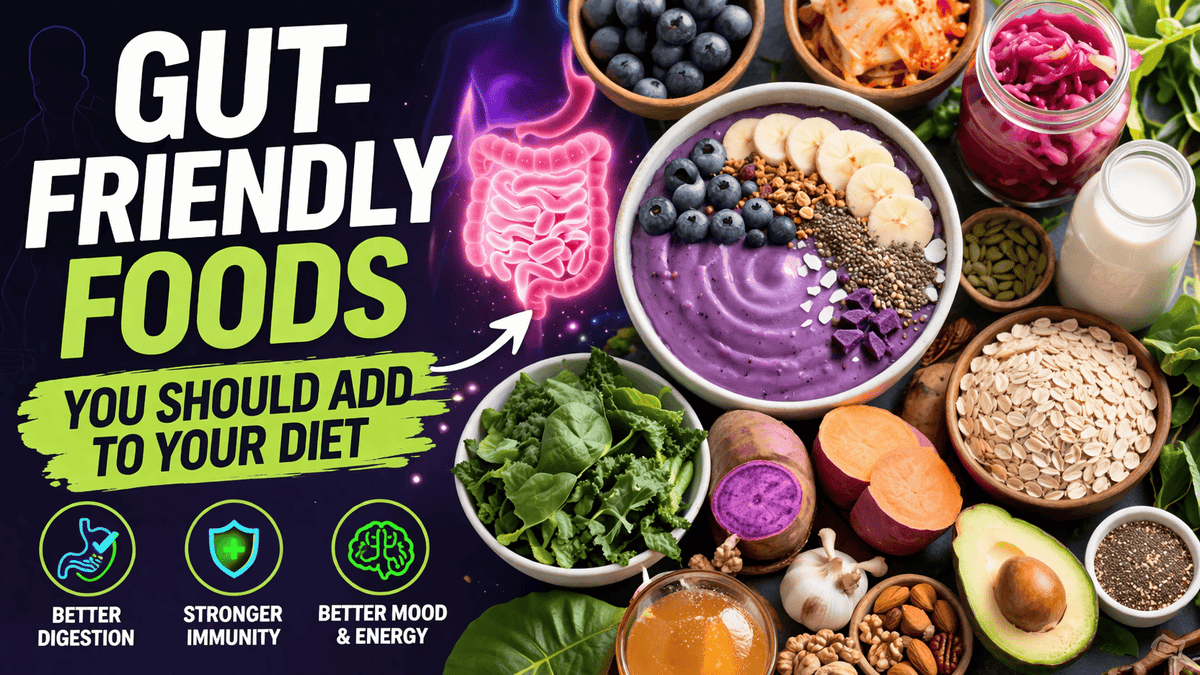
Your gut does far more than just digest food—it plays a central role in your immune system, mental health, energy levels, and overall well-being. In recent years, scientists have increasingly referred to the gut as the “second brain,” and for good reason. A healthy gut microbiome (the trillions of bacteria living in your digestive system) can influence everything from mood to metabolism.
The good news? You can significantly improve your gut health simply by choosing the right foods.
In this guide, we’ll explore the best gut-friendly foods you should add to your diet, why they work, and how to incorporate them into your daily routine.
Why Gut Health Matters
Before diving into specific foods, it’s important to understand why gut health is so crucial.
Your gut microbiome helps:
- Break down food and absorb nutrients
- Regulate your immune system
- Produce essential vitamins (like B12 and K)
- Maintain a healthy metabolism
- Support mental health through the gut-brain connection
When your gut is out of balance, you may experience:
- Bloating and digestive discomfort
- Fatigue
- Weakened immunity
- Mood swings or brain fog
Improving your diet is one of the most effective ways to restore balance.
1. Fermented Foods (Probiotic Powerhouses)
Fermented foods are rich in probiotics, the beneficial bacteria your gut needs to thrive.
Examples:
- Yogurt (with live cultures)
- Kefir
- Sauerkraut
- Kimchi
- Kombucha
Why they help:
These foods introduce healthy bacteria into your digestive system, improving microbial diversity and aiding digestion.
Tip:
Start small if you’re new to fermented foods—your gut needs time to adjust.
2. Fiber-Rich Foods (Prebiotic Fuel)
If probiotics are the “good bacteria,” then fiber is their fuel.
Examples:
- Oats
- Bananas
- Apples
- Garlic
- Onions
- Asparagus
Why they help:
Fiber acts as a prebiotic, feeding beneficial gut bacteria and helping them multiply.
Bonus:
Fiber also supports regular digestion and helps prevent constipation.
3. Whole Grains
Whole grains are an excellent source of fiber and nutrients.
Examples:
- Brown rice
- Quinoa
- Whole wheat
- Barley
Why they help:
They promote the growth of beneficial bacteria and improve gut diversity.
4. Leafy Greens
Vegetables like spinach and kale are loaded with nutrients and fiber.
Why they help:
Leafy greens contain compounds that encourage the growth of good bacteria and reduce inflammation in the gut.
5. Healthy Fats
Not all fats are bad—some are essential for gut health.
Examples:
- Olive oil
- Avocados
- Nuts and seeds
Why they help:
Healthy fats help reduce inflammation and support the lining of the digestive tract.
6. Bone Broth
Bone broth has gained popularity for its gut-healing properties.
Why it helps:
It contains collagen, gelatin, and amino acids that help repair the gut lining and improve digestion.
7. Fruits Rich in Polyphenols
Polyphenols are plant compounds that act as antioxidants.
Examples:
- Berries
- Grapes
- Pomegranates
Why they help:
They support beneficial gut bacteria and reduce harmful microbes.
8. Legumes
Beans and lentils are nutritional powerhouses.
Why they help:
They are rich in fiber and resistant starch, both of which feed good gut bacteria.
9. Natural Root Foods (Like Purple Yam / Ube)
Root vegetables are often overlooked, but they are excellent for gut health.
Examples:
- Sweet potatoes
- Yams
- Purple yam (ube)
Why they help:
These foods are rich in:
- Complex carbohydrates
- Fiber
- Antioxidants
They provide slow-releasing energy while supporting a healthy digestive system.
🌿 A Simple Way to Add Gut-Friendly Nutrition
If you’re looking for an easy way to incorporate gut-friendly ingredients into your routine, natural powders can be a convenient option.
For example, ube (purple yam) powder is gaining popularity as a versatile superfood. It’s rich in fiber and antioxidants, making it a great addition to smoothies, lattes, or breakfast bowls.
One brand worth checking out is Ubiyam, which offers 100% pure ube powder sourced from the Philippines. Their product contains no additives or sugars, making it a clean and simple way to boost your daily nutrition while supporting gut health. You can easily mix it into your favorite recipes for a natural, gut-friendly upgrade.
10. Hydrating Foods and Water
Hydration is often overlooked but essential for gut health.
Examples:
- Cucumbers
- Watermelon
- Herbal teas
Why they help:
Water helps move food through the digestive system and supports nutrient absorption.
Foods to Avoid for Better Gut Health
Just as important as what you eat is what you limit.
Try to reduce:
- Processed foods
- Excess sugar
- Artificial sweeteners
- Excess alcohol
- Highly refined carbs
These can disrupt the balance of your gut microbiome.
How to Build a Gut-Friendly Diet (Simple Plan)
You don’t need a complicated diet—just follow these principles:
🥗 Daily structure:
- Include fiber-rich foods in every meal
- Add fermented foods regularly
- Choose whole, unprocessed ingredients
- Stay hydrated
🥤 Example day:
- Breakfast: Oatmeal with berries
- Lunch: Quinoa salad with vegetables
- Snack: Yogurt or smoothie
- Dinner: Lean protein with leafy greens
Signs Your Gut Is Improving
As you adopt a gut-friendly diet, you may notice:
- Better digestion
- Less bloating
- More stable energy levels
- Improved mood
- Stronger immunity
These changes often happen gradually but can be very impactful.
Final Thoughts
Your gut health is the foundation of your overall well-being. By adding more gut-friendly foods like fermented products, fiber-rich plants, healthy fats, and natural root vegetables, you can support your microbiome and feel better from the inside out.
The key is consistency—not perfection. Small daily choices can lead to major long-term benefits.
Start simple:
- Add one new gut-friendly food this week
- Replace processed snacks with whole options
- Experiment with easy recipes
Over time, your gut—and your entire body—will thank you.
Similar articles :
 Organic Ube Powder