
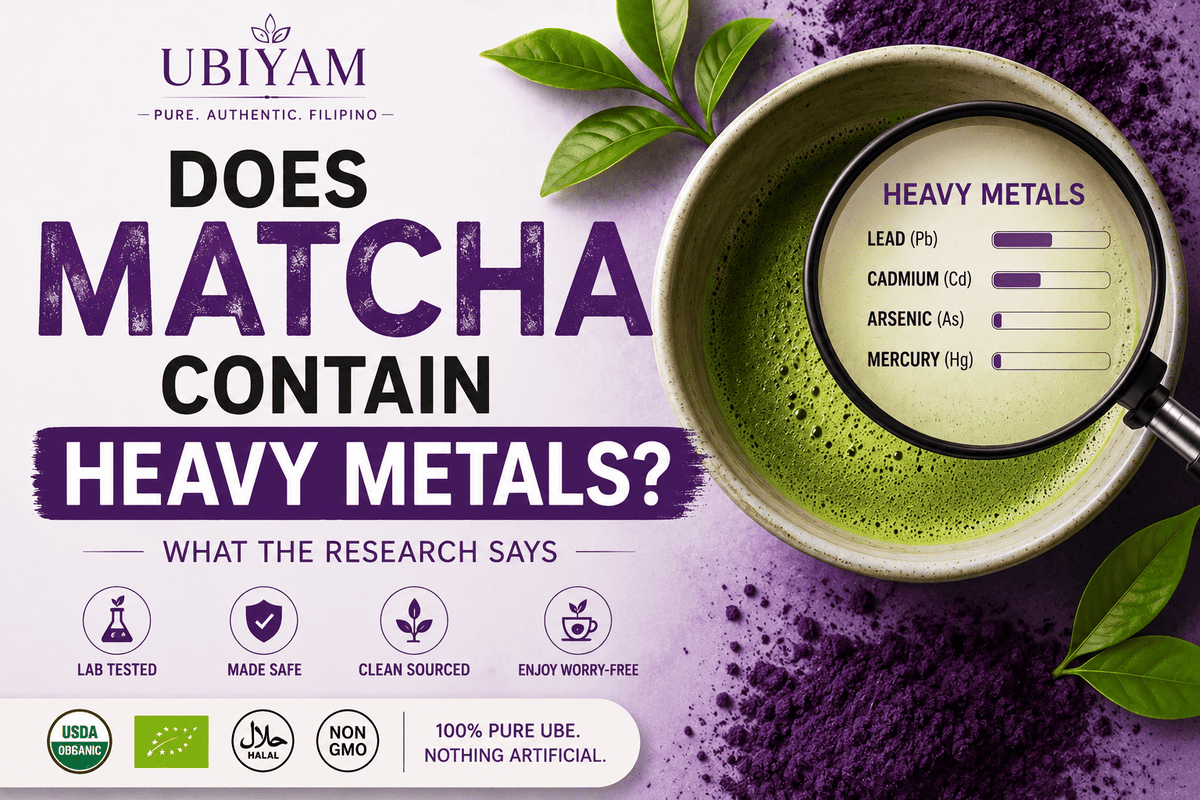
Matcha has become one of the world's most popular superfoods. From vibrant green lattes to antioxidant-rich smoothies, this powdered green tea has earned a reputation as a healthy addition to many diets. However, as consumers become more aware of food safety, an important question continues to emerge: Does matcha contain heavy metals?
The short answer is that matcha, like many agricultural products, can contain trace amounts of heavy metals. The more important question is how much, whether those levels are considered safe, and what consumers can do to make informed purchasing decisions.
In this article, we'll explore what scientific research says about heavy metals in matcha, how contamination can occur, the factors that influence heavy metal levels, and how matcha compares to other popular plant-based superfoods such as ube.
What Are Heavy Metals?
Heavy metals are naturally occurring elements found in soil, water, and the environment. Some heavy metals are essential for human health in very small amounts, while others can be harmful when consumed in excessive quantities over long periods.
Common heavy metals discussed in food safety research include:
-
Lead
-
Cadmium
-
Arsenic
-
Mercury
Plants absorb nutrients and minerals from the soil through their root systems. Unfortunately, they can also absorb trace amounts of contaminants present in the soil, water, or air.
Because matcha is made from whole tea leaves that are ground into powder and consumed entirely, concerns about heavy metal accumulation tend to receive more attention than with traditional brewed tea.
Why Matcha Is Different from Regular Green Tea
Traditional green tea is prepared by steeping leaves in hot water and then discarding the leaves.
Matcha is different.
To make matcha, specially grown green tea leaves are harvested, dried, and finely ground into powder. When you drink matcha, you consume the entire leaf rather than just an infusion.
This unique preparation method offers several benefits:
-
Higher antioxidant content
-
More concentrated nutrients
-
Increased chlorophyll levels
-
Enhanced flavor profile
However, because the entire leaf is consumed, any naturally occurring contaminants present in the leaf may also be consumed.
This is one reason why researchers and food safety experts often pay close attention to heavy metal levels in matcha products.
What Research Says About Heavy Metals in Matcha
Numerous studies have examined tea products for heavy metal content.
Research consistently shows that tea plants can absorb metals from soil and environmental sources. The amount varies significantly depending on:
-
Growing location
-
Soil quality
-
Agricultural practices
-
Industrial pollution levels
-
Harvesting methods
-
Manufacturing standards
Studies have detected trace levels of lead, cadmium, and other metals in some tea products. However, findings vary widely from one brand to another.
Importantly, reputable manufacturers often conduct laboratory testing to ensure products comply with food safety standards established by regulatory agencies.
The presence of a heavy metal does not automatically mean a product is unsafe. Nearly all foods contain trace amounts of naturally occurring substances. Safety depends on the concentration and frequency of consumption.
Where Do Heavy Metals in Matcha Come From?
Heavy metal contamination can originate from several sources.
Soil Conditions
Tea plants are efficient at absorbing minerals from the ground. If soil contains elevated levels of lead, cadmium, or arsenic, those elements may be absorbed by the plant.
Industrial Pollution
Tea plantations located near industrial zones, highways, or mining operations may face higher environmental exposure.
Water Sources
Irrigation water can also influence the concentration of contaminants in agricultural products.
Processing and Manufacturing
Poor manufacturing practices may introduce additional contamination during harvesting, drying, grinding, packaging, or transportation.
This is why sourcing and quality control play such a critical role in determining the overall safety of matcha products.
Should Consumers Be Worried?
For most healthy adults consuming moderate amounts of matcha from reputable sources, current evidence does not suggest a major cause for concern.
However, consumers should remain informed and selective.
When purchasing matcha, look for:
-
Third-party testing
-
Transparent sourcing information
-
Organic certifications when available
-
Reputable manufacturers
-
Published laboratory reports
Brands that openly discuss quality control and testing procedures generally inspire greater consumer confidence.
How to Choose a Safer Matcha Product
If heavy metals are a concern, consider the following guidelines:
Buy from Established Brands
Reputable companies invest in quality control and product testing.
Look for Independent Testing
Third-party laboratory verification provides additional assurance.
Check Country of Origin
Growing conditions vary significantly across regions.
Avoid Extremely Cheap Products
Quality testing, careful sourcing, and proper manufacturing all come at a cost.
Read Customer Reviews
Long-term customer feedback can reveal important information about consistency and quality.
Matcha vs Ube: A Growing Conversation
As awareness of heavy metals in tea products increases, some consumers have started exploring alternative plant-based superfoods.
One option gaining popularity is ube.
Ube, also known as purple yam, is a root vegetable traditionally cultivated in the Philippines. Known for its vibrant purple color and naturally sweet flavor, ube has become increasingly popular in beverages, desserts, and wellness recipes.
Unlike matcha, which is produced from tea leaves, ube comes from an underground root crop.
This difference in plant structure and cultivation methods creates a distinct nutritional profile and a different conversation around food safety.
Comparing Matcha and Ube
Taste
Matcha has a grassy, earthy flavor with slight bitterness.
Ube offers a naturally sweet, creamy, vanilla-like taste that many consumers find easier to enjoy without sweeteners.
Caffeine Content
Matcha naturally contains caffeine.
Ube contains no caffeine.
Consumers seeking natural energy without stimulants may prefer matcha, while those looking for a caffeine-free option may gravitate toward ube.
Color and Culinary Uses
Both ingredients are visually striking.
Matcha provides a bright green color.
Ube delivers a vibrant purple hue.
Each can be used in:
-
Lattes
-
Smoothies
-
Ice cream
-
Pancakes
-
Cookies
-
Cakes
-
Specialty desserts
Food Safety Considerations
As with any agricultural product, both matcha and ube should ideally come from trusted suppliers that prioritize quality testing and responsible sourcing.
Consumers increasingly appreciate transparency regarding product origin, farming methods, and laboratory verification.
Why Many Consumers Are Discovering Ube
The rise of ube is not simply about replacing matcha.
Many consumers enjoy incorporating both ingredients into a balanced diet.
However, ube offers several appealing characteristics:
-
Naturally caffeine-free
-
Sweet flavor without added sugar
-
Rich purple color
-
Versatile culinary applications
-
Growing popularity among health-conscious consumers
Its unique taste profile makes it an attractive alternative for those seeking variety beyond traditional green tea products.
Discover Premium Organic Ube Powder
If you're interested in exploring high-quality ube products, UBIYAM has become a trusted destination for organic ube powder sourced from the Philippines.
UBIYAM focuses on delivering pure, high-quality ube powder without fillers, artificial additives, or unnecessary ingredients. Whether you're making an ube latte, smoothie, cheesecake, cookies, pancakes, or frozen desserts, their premium ube powder provides the authentic flavor and vibrant purple color that ube enthusiasts love.
As consumers become more conscious about ingredient sourcing and product transparency, choosing trusted suppliers matters more than ever. UBIYAM's commitment to quality helps customers enjoy authentic ube while creating delicious recipes at home.
Final Thoughts
So, does matcha contain heavy metals?
Research shows that matcha can contain trace amounts of heavy metals, just as many agricultural products can. The key factors are concentration, sourcing, quality control, and testing practices.
For most consumers, purchasing matcha from reputable brands that prioritize laboratory testing and transparency is the best approach.
At the same time, growing interest in alternative superfoods such as ube highlights the importance of variety in a healthy diet. Whether you prefer the energizing qualities of matcha or the naturally sweet, caffeine-free appeal of ube, informed purchasing decisions can help you enjoy these popular ingredients with confidence.
Ultimately, quality matters more than trends. By choosing trusted brands and understanding where your food comes from, you can continue enjoying your favorite superfoods while prioritizing both nutrition and peace of mind.
Similar topics :
 Organic Ube Powder


